We are launching our agentic loop for financial analysis: purpose-built to tackle messy document workflows with relentless validation.
How things currently work
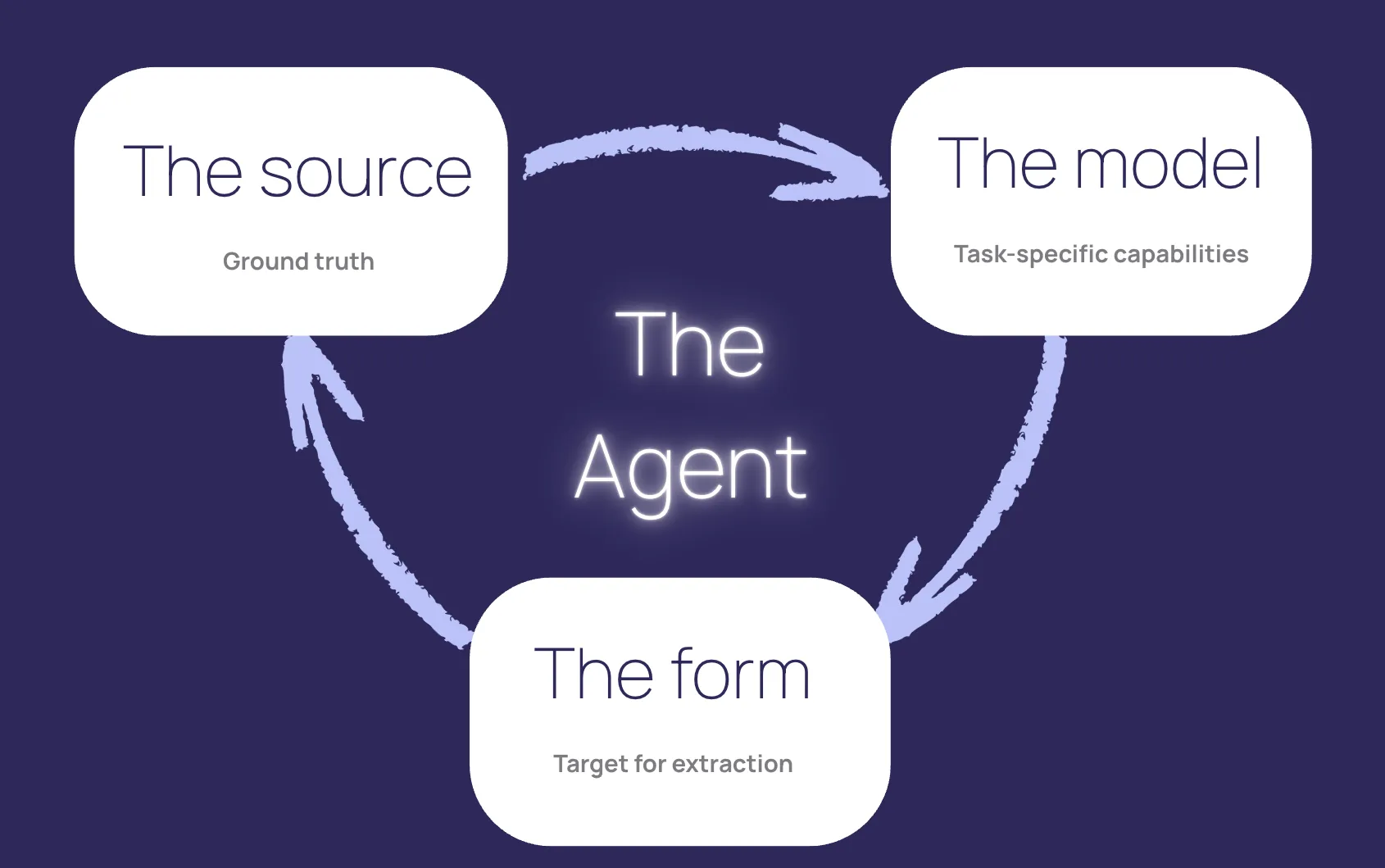
Our core product has always been built on three key components working together:

The form sets the target for extraction. It defines exactly what business financials we need to pull and how they should be structured.
The model provides task-specific capabilities: extracting data from documents, performing validation, self-healing extractions, and running analysis.
The source is the ground truth: documents, emails, spreadsheets, and images that contain the raw financial information.
The task has always been simple: combine form + model + source, and you get perfectly formatted data with source citations, ready to power complex business underwriting and analysis workflows.
What we have added is an agent that wraps these three components into a more capable coordinator.
Why we needed an agentic rethink
A new wave of coding agents clarified the future. Earlier this year, the wider world finally saw coding agents in action. That moment confirmed how agentic systems would shape the future of our work: financial statement extraction, consolidation, and synthesis for business lending.
Our specification, tools, and environment were already primed. For years we have honed the specification that guides every spread: tightening language, encoding lender judgement, and building the context analysts rely on. Alongside that spec we assembled the right tools and UX to create an environment where analysts can operate safely and reliably assess businesses.
Complex deals exposed cracks in linear workflows. Yet the more complex the deal, the more obvious the constraints became. Trying to replace an entire analyst in one step overwhelmed any single run. Mixed document sets, multi-entity consolidations, and anomalies created failure modes that a linear workflow could not absorb. We needed something that could plan, adapt, and validate.
Our Agentic pipeline
The question was reliable spreading amid messy inputs. The challenge became simple: How do we deliver reliable financial spreading when every deal is messy? Our answer is an agentic loop that plans before it acts, decomposes the work, and keeps cycling until the spec is satisfied.
Planning upfront keeps the loop oriented. Each run opens by outlining the task against the spec, sampling documents, and reviewing deal notes to expose edge cases before execution begins.
Purpose-built tools make execution resilient. Extraction with healing re-runs questionable pulls, targeted calculations and comparisons keep rollups consistent across entities, and structured note taking ensures insights compound for future runs.
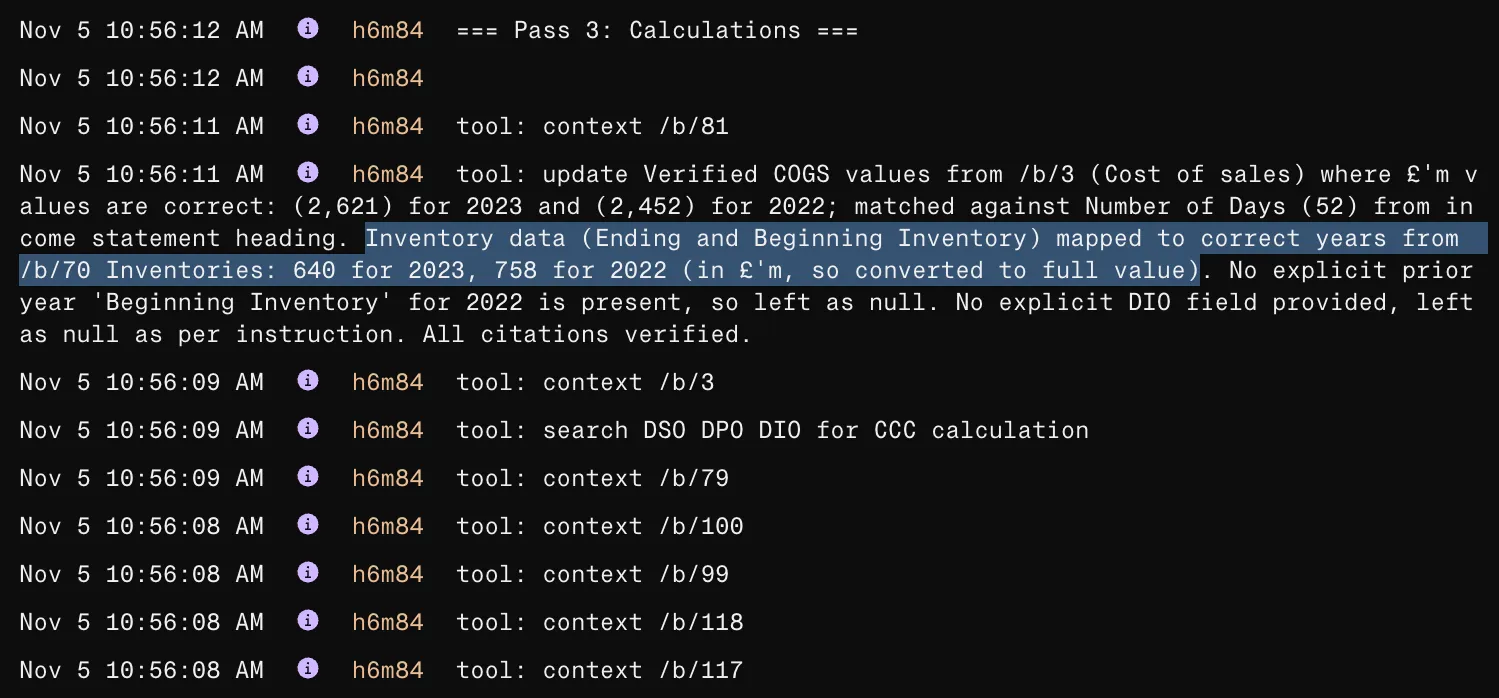
Continuous validation closes the gap. After every pass, the loop performs spec-versus-output validation: probing empty fields, stress-testing anomalies, and flagging anything that contradicts the deal narrative. If something looks off, the cycle restarts with new evidence in hand. This fast feedback loop drives rapid improvement.
Human guidance stays central to the experience. Users can launch the loop via API, monitor progress, answer clarifications, or redirect it when a rabbit hole appears. Because the core model stays focused on decisions, not intermediate clutter, those interventions are fast and high leverage.
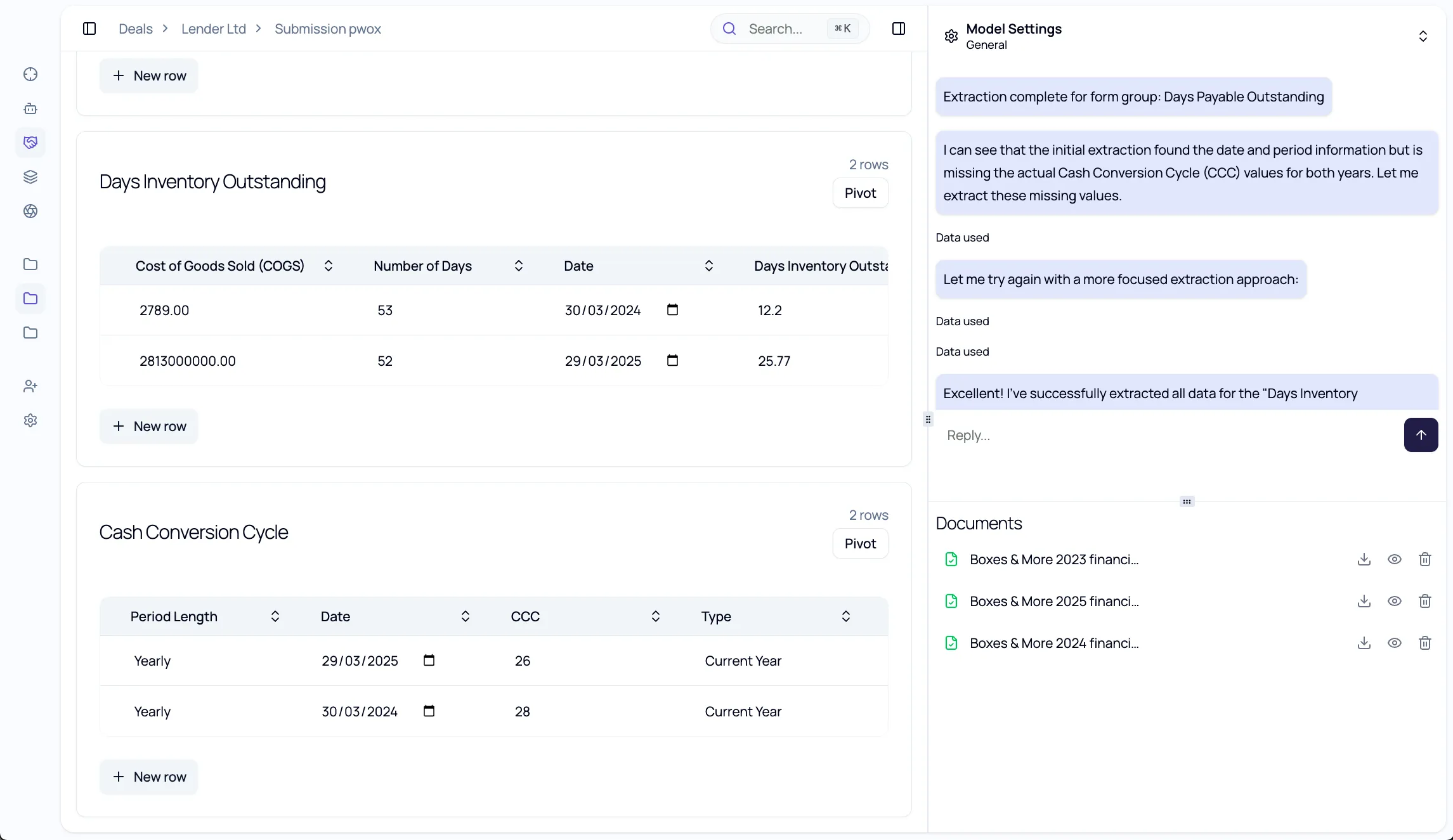 Embedded delivery makes adoption immediate. The result is an embedded capability that slots into existing workflows. Drop it into a platform riddled with copy-paste tasks, send the documents and target forms, and the loop will extract, heal, validate, and return work you can trust. It is not a promise of an end-to-end super-agent but a resilient workflow that compounds value deal after deal.
What this means for our customers
Speed that keeps deals moving. Launch an agentic loop directly from your existing workflow, hand it the source documents, and receive spreads that are ready for review without slowing a deal cycle down. SME Capital reduced their monthly spreading from 35 hours to 2 hours using this approach.
Accuracy you can defend. Healing extractions, structured calculations, and spec-versus-output checks converge so every figure is backed by traceable context, giving credit teams confidence when decisions hit committee.
Consistency across every underwriting. Whether it is a single-entity statement or a complex consolidation, the loop reproduces the same process each time, keeping metrics aligned across portfolios and geographies.
We are just getting started. Each engagement sharpens the spec, matures the tools, and strengthens the feedback loop. If you are ready to experience it, send us your documents and see how quickly an agentic loop can transform your team’s financial analysis.
